The first principle for a sustainable economy: The polluter Pays.
Carbon tax is a charge applied to products and services based on the fossil fuel consumption and subsequent carbon emissions they create. Based on a ‘polluter pays’ principle, carbon tax ensures that the businesses and individuals who create the most carbon emissions pay for the damage they are causing. We are proposing that a carbon tax would be applied to goods in proportion to the carbon emitted both on good made in the UK as well as imposing an import duty on goods coming into the UK so that our businesses are not put at a disadvantage and so create a level playing field.
What would this mean in practice? A few examples of the polluter pays:
Home heating. Will you heat your home with a carbon free electricity tariff or will you choose to heat your home with fossil fuel gas or oil and pay for your carbon pollution surcharge?
Travelling to Edinburgh? Will you travel by electric train or will you travel plane and pay the carbon tax?
Eating: Which is best for the planet, local seasonal vegetables, food produced in heated greenhouses or foods flown in from far flung places? A carbon tax helps consumers to know which product has the lowest carbon footprint.
In each of these cases, today the costs of pollution are externalised, with a carbon tax we see and pay for the pollution we personally create.
At the 2015 Paris Agreement a pledge was made to implement policies and adjust behaviours in order to limit the global temperature increase to 1.5 – 2.0 degrees. We are currently not on track to meet this target, and this is becoming more and more visible through issues such as the bush fires in Australia, the forest fires in California and the devasting floods we’ve recently seen across Europe. The Government claims to be a world leader on climate change. It’s true that this county has done a lot to decarbonize electricity generation – unfortunately in key areas like transport, home heating and food production the measures in place are simply not on track. But most worryingly our carbon emissions do not include carbon emitted in air travel, shipping or the embedded carbon contained within the millions of tonnes of goods we import into this country each year.
So, why do we need a carbon tax. It does two things it reduces the demand for things that produce lots of CO2 but it also provides the money we need to heavily invest to get to our carbon neutral future. We are going to need a lot of money to decarbonize transport, home heating, food production and heavy industrial users of fossil fuels.
A carbon tax would push individuals and businesses to minimize their carbon emissions. A carbon tax would also increase demand and extend the market for low carbon green alternatives.
Two key objections are the potential impact on UK business and exporting jobs and the effect this tax may have on low and medium income families. Let’s look at these two in turn.
To avoid creating an unfair market for products made in the UK it will be necessary to introduce an import duty on imported goods where-ever that country has not already introduced a carbon tax. In the ideal world all countries will introduce their own carbon taxes and for those countries that do have a carbon tax no additional import duties would be levied. Quite quickly exporting countries will realise that it’s better for them to have their own carbon tax so that they keep the tax money rather than the tax being paid to our country. In this way as the UK and other enlightened countries introduce the carbon tax it will put positive pressure on all the countries that export to us to introduce their own carbon tax – all whilst maintaining a level playing field for UK business.
The other reasonable objection that could be made about a carbon tax is that it will be an unfair burden on low and middle income families. No policy is an island and every change needs to be applied fairly. There are many ways that the fairness issue can be resolved within the tax and benefit system. The Green Party’s solution to use some of the carbon tax raised as a kind of carbon tax dividend that is to have a flat rate non means-tested universal basic income paid to everyone. If you don’t support the principles of UBI other more complicated means-tested tax and benefits solutions could be considered.
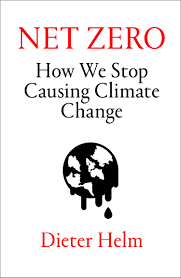
Highly recommend this book: